
FlightPush · Resources
Aviation Articles
Understand the principles behind a flight, with explanations connected to FlightPush's FAA reference library. Browse by subject to connect practical explanations with the source material.
Reviewed Articles
Flight Planning
Routes, fuel, alternatives, and decisions before departure.
Flight Planning
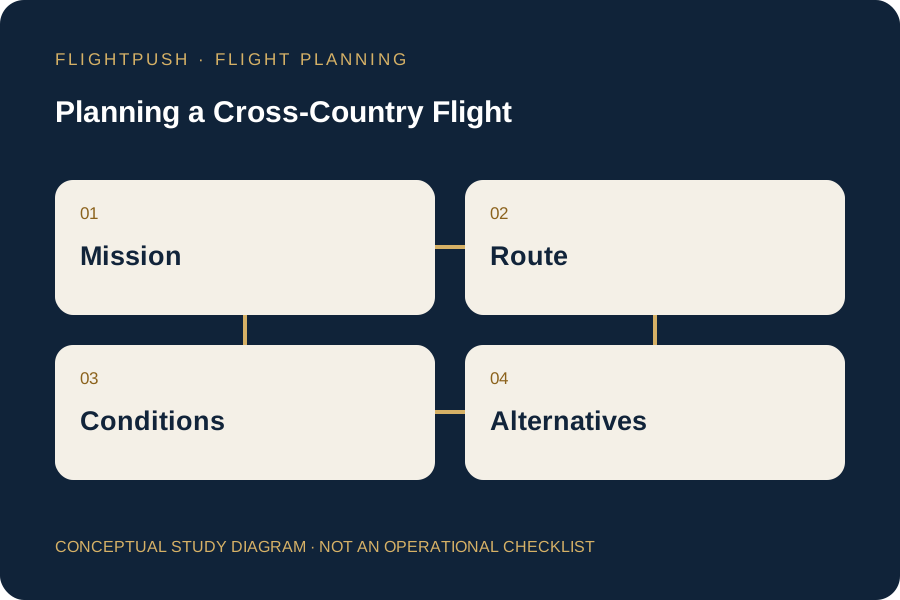
Planning a Cross-Country Flight: Building a Plan That Can Change
Connect weather, terrain, fuel, airport suitability, and alternatives into a cross-country plan that remains useful when conditions change.
Published Aviation Guide
Read Article →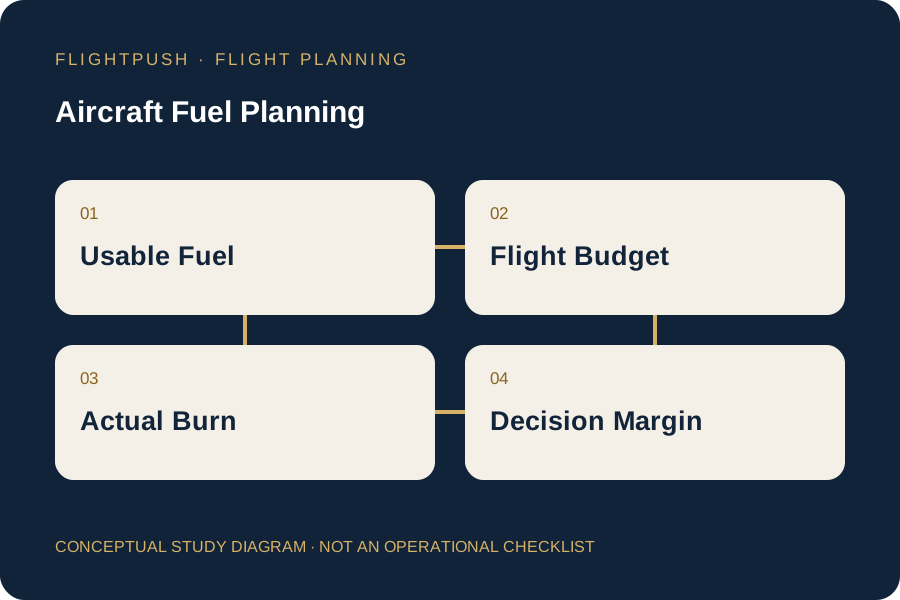
Flight Planning
Aircraft Fuel Planning: Reserves, Reality, and Early Decisions
Understand why legal fuel reserves, usable fuel, actual consumption, and diversion decisions belong in one continuous planning process.
Published Aviation Guide
Read Article →Aircraft Performance & Aerodynamics
Understand how loading, air density, and angle of attack affect flight.
Aircraft Performance
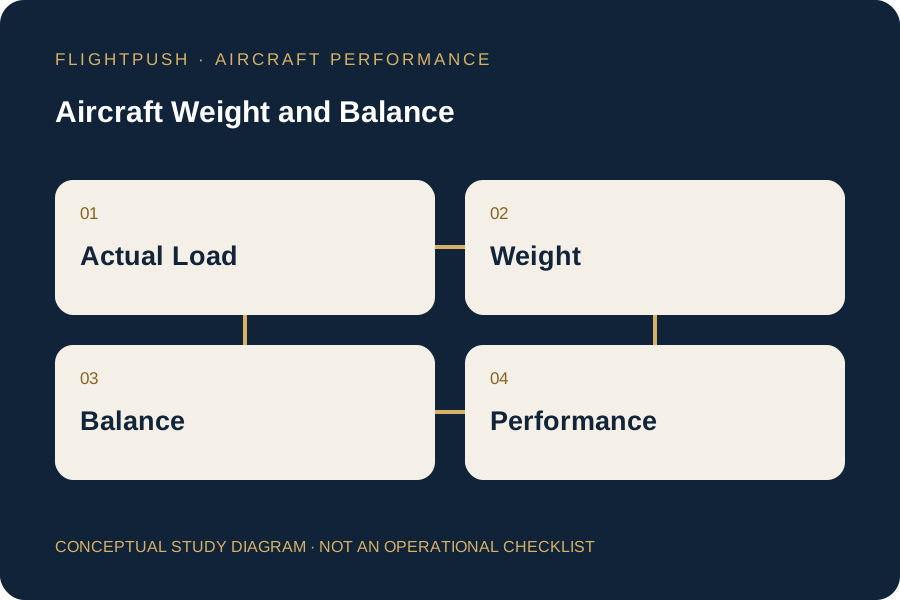
Aircraft Weight and Balance: More Than Staying Under a Number
See how loading affects center of gravity, performance, handling, and the choices available before and during a flight.
Published Aviation Guide
Read Article →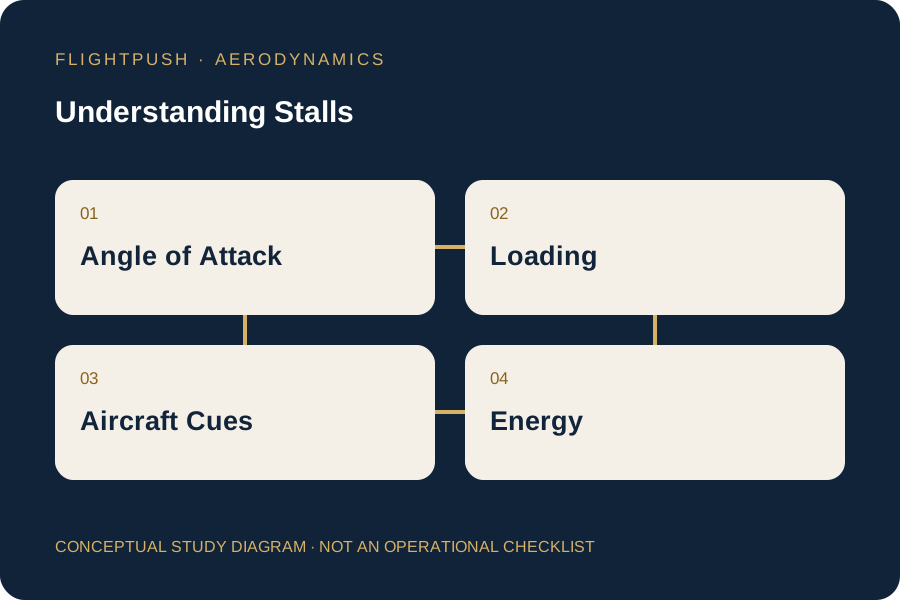
Aerodynamics
Understanding Stalls: Angle of Attack, Load Factor, and Energy
Understand why a stall is about angle of attack, how loading changes the margin, and why airspeed alone cannot describe the whole situation.
Published Aviation Guide
Read Article →Aircraft Performance
What Is Density Altitude, and Why Does It Affect Aircraft Performance?
Learn how heat, elevation, and air density change aircraft performance, and why density altitude matters to airplane and drone pilots.
Published Aviation Guide
Read Article →Aviation Weather
Interpret observations and forecasts in the context of the flight.
Weather
How to Read METARs and TAFs
Decode METAR and TAF groups step by step, find the actual ceiling, read forecasts as timelines, and use both products in real preflight decisions.
Published Aviation Guide
Read Article →Weather
Cloud Ceiling vs. Visibility: Two Different Limits on a Flight
Learn what an aviation ceiling means, how it differs from visibility, and why scattered clouds do not establish a reported ceiling.
Published Aviation Guide
Read Article →Flight Operations & Airspace
Airports, airspace, and the practical demands of day-to-day flying.
Flight Operations
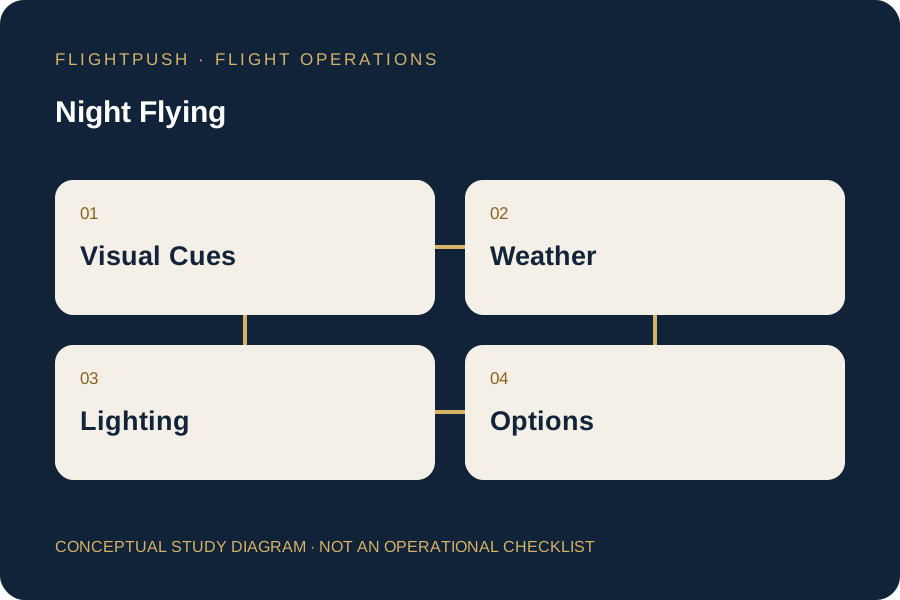
Night Flying: Visibility, Visual Illusions, and Better Preparation
Explore how darkness changes visual cues, weather assessment, airport selection, and the margins needed for a well-planned flight.
Published Aviation Guide
Read Article →Airspace
Controlled vs. Uncontrolled Airspace: What Is the Difference?
Understand what controlled airspace means, why Class G still has rules, and how airspace requirements differ for airplanes and drones.
Published Aviation Guide
Read Article →Airport Operations
How to Read an Airport Diagram Before You Start Moving
Understand runway numbers, taxiways, hot spots, and holding positions so an airport diagram becomes a useful planning tool.
Published Aviation Guide
Read Article →Human Factors & Decisions
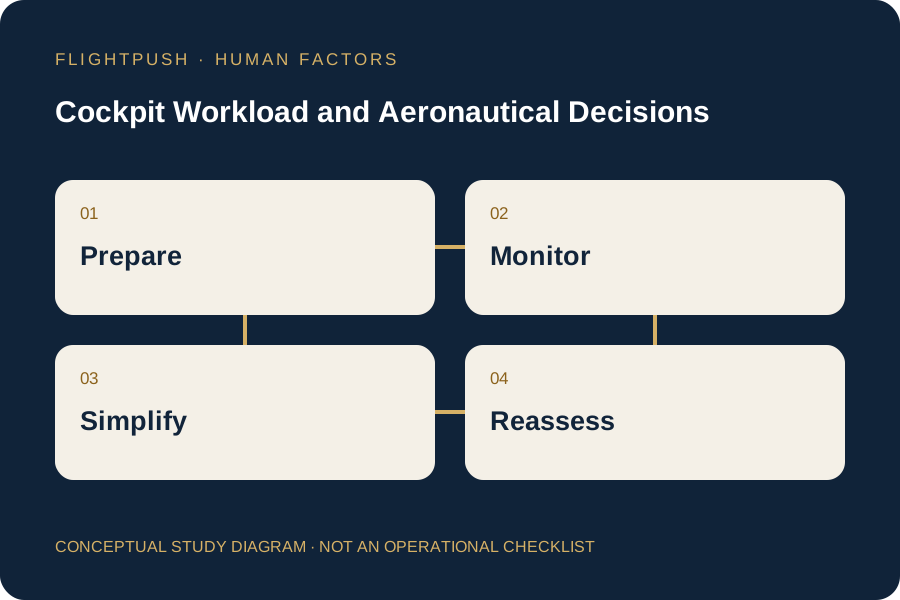
Protect attention, recognize pressure, and preserve useful options.
Understanding Air Traffic Control
How communications, facilities, and traffic flows fit together.
Air Traffic Control
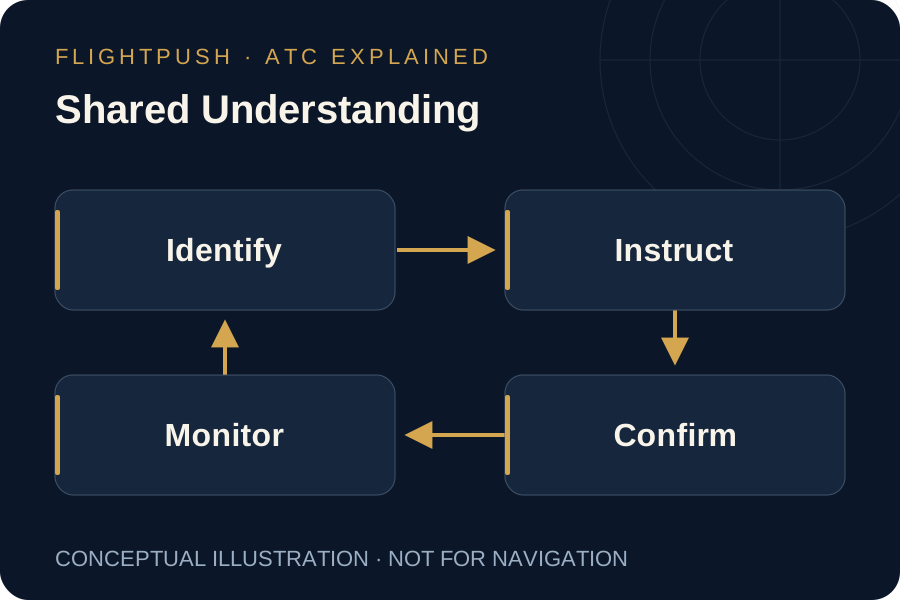
How Pilots and ATC Communicate
From callsigns and readbacks to handoffs and guard, understand how pilots and controllers build and maintain a shared picture.
Published Aviation Guide
Read Article →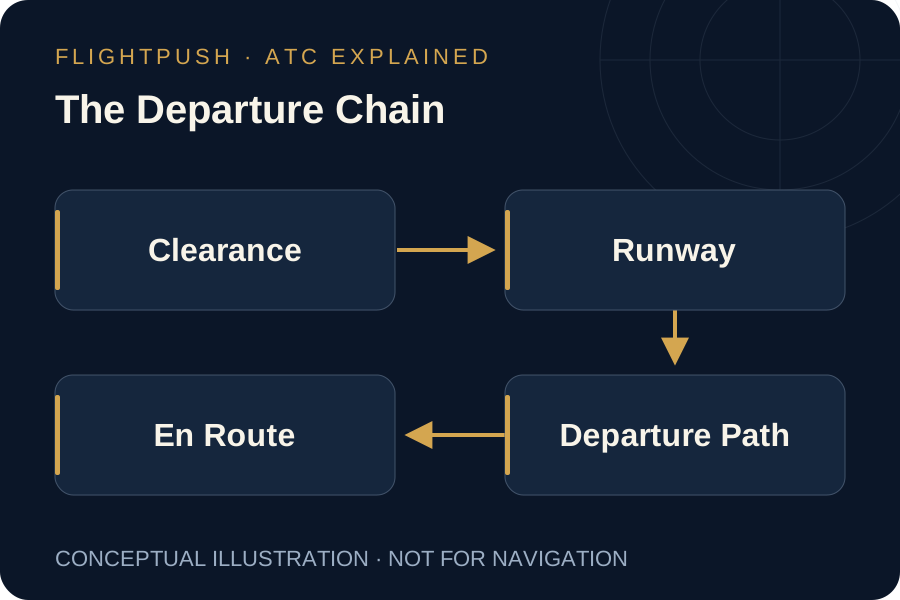
Air Traffic Control
How ATC Manages Departures
Follow a departure from its clearance through the runway, SID, climb, and handoff, and see why each stage depends on the next.
Published Aviation Guide
Read Article →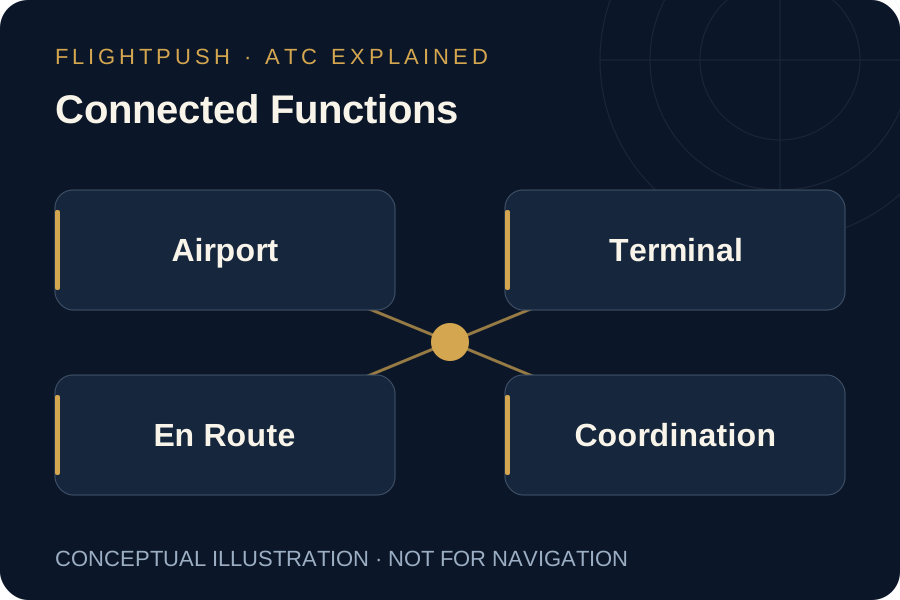
Air Traffic Control
Tower, Approach, and Center: How the ATC System Fits Together
Understand the functions behind the radio voices, how facilities coordinate, and why one flight moves through several parts of ATC.
Published Aviation Guide
Read Article →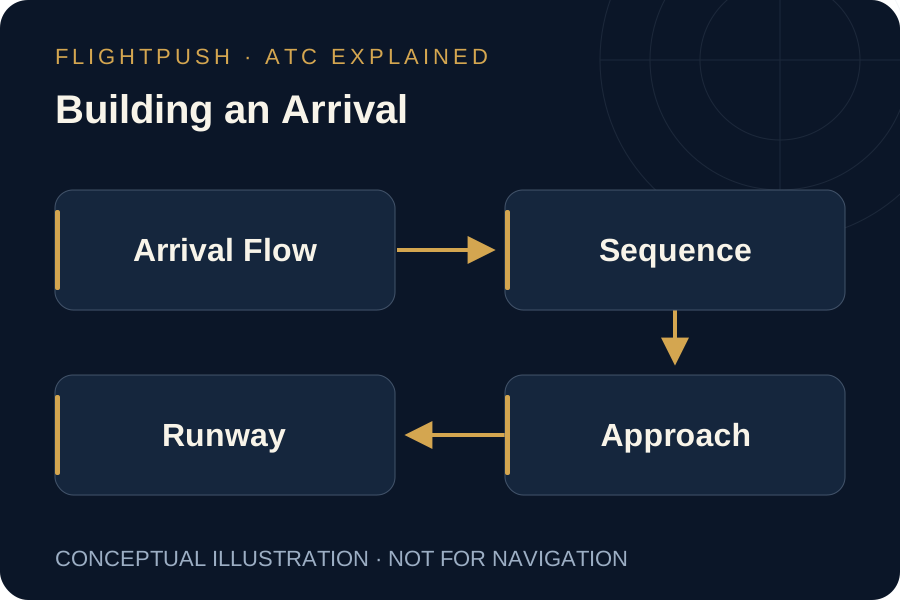
Air Traffic Control
How ATC Organizes Arrivals and Approaches
Connect arrival routes, speed control, vectors, approaches, and runway use into one picture of how aircraft reach the destination.
Published Aviation Guide
Read Article →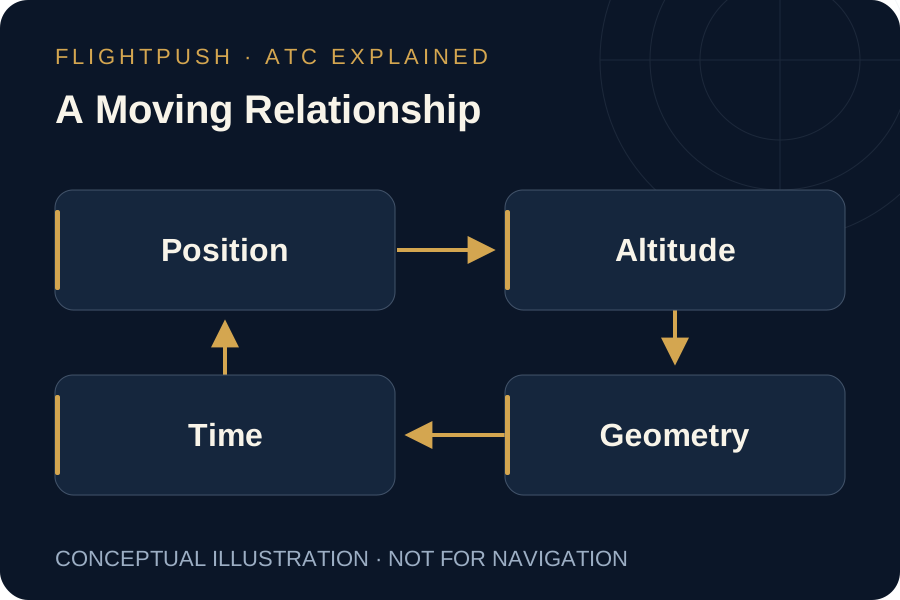
Air Traffic Control
How ATC Keeps Aircraft Separated
Explore the relationship between altitude, surveillance, geometry, visual procedures, and wake turbulence without assuming one universal distance.
Published Aviation Guide
Read Article →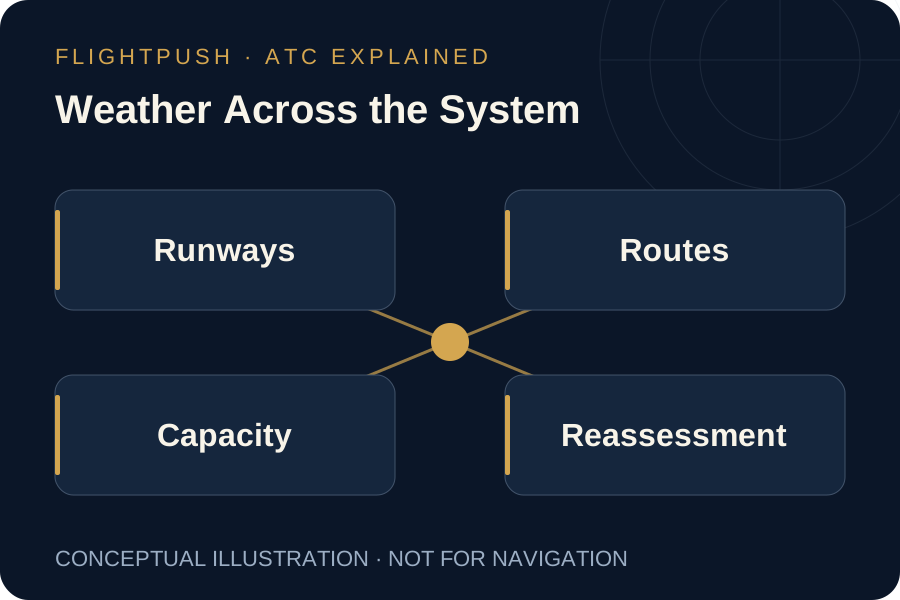
Air Traffic Control
How Weather Changes the ATC Plan
See how weather changes runway use, routes, traffic capacity, pilot requests, and delays far beyond the airport where it occurs.
Published Aviation Guide
Read Article →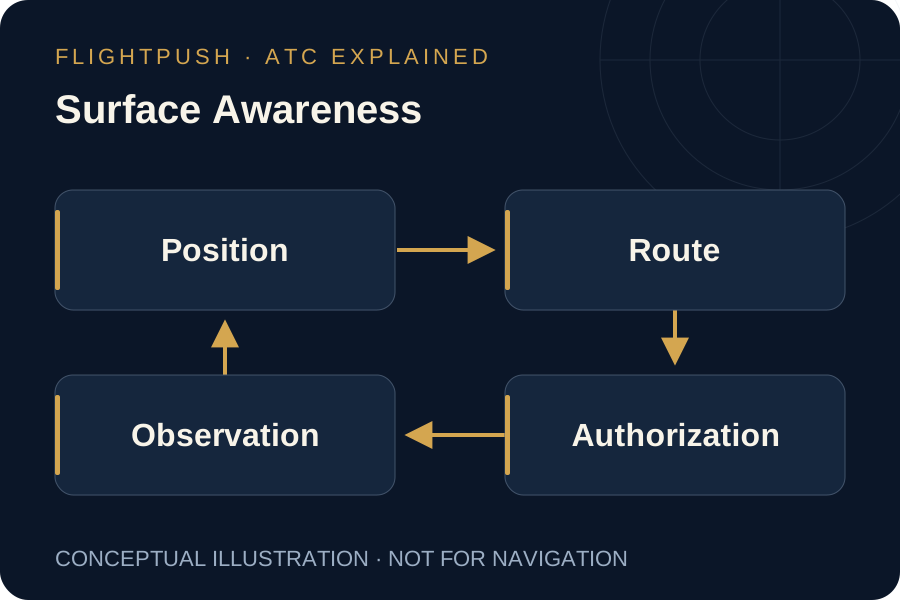
Air Traffic Control
How ATC Manages Runways and Taxiways
Understand airport movement as a connected operation involving routes, clearances, crossings, signs, runway occupancy, and pilot awareness.
Published Aviation Guide
Read Article →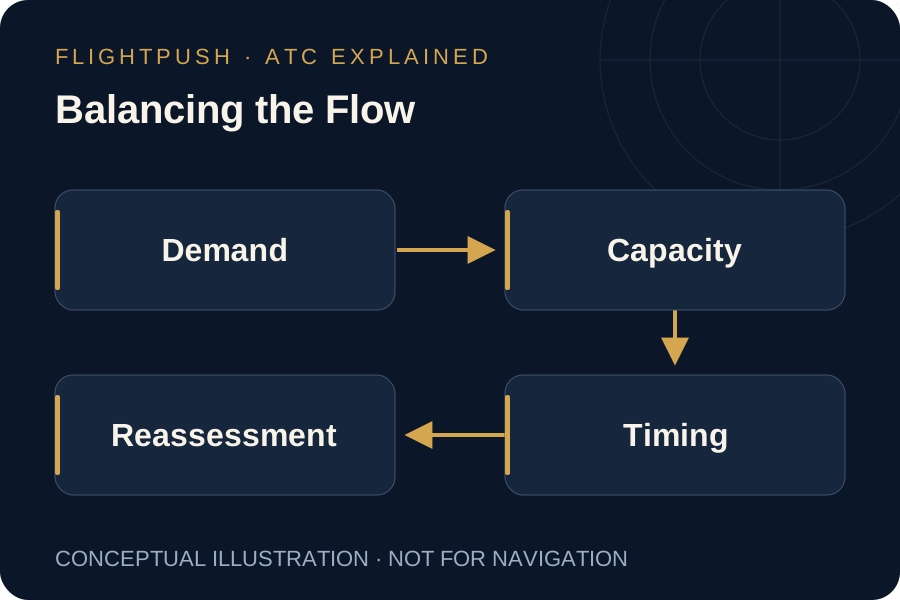
Air Traffic Control
Why ATC Delays Happen: Traffic Management Explained
Understand how demand, capacity, ground stops, departure timing, and downstream constraints connect to the wait a passenger sees.
Published Aviation Guide
Read Article →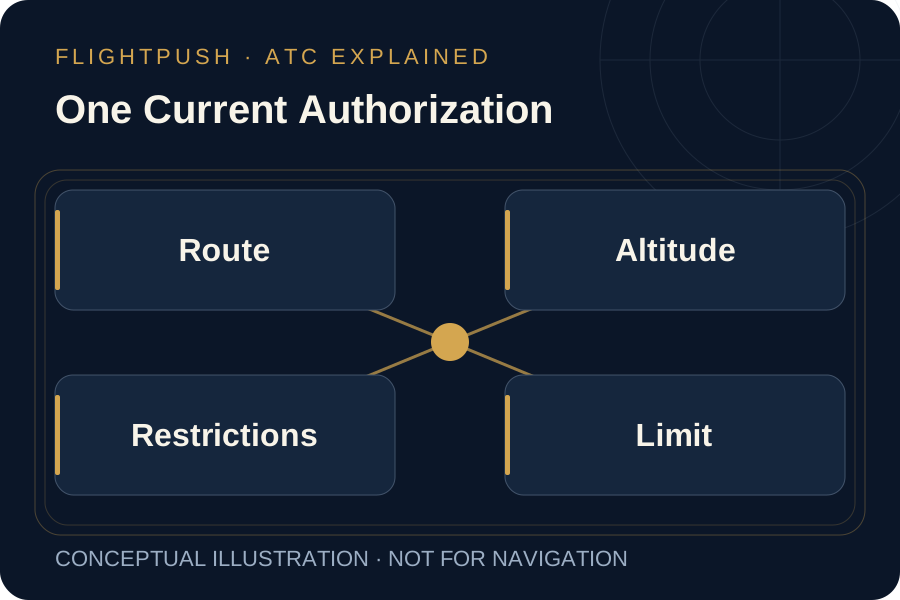
Air Traffic Control
Understanding IFR Clearances From Departure to Landing
Learn how routes, altitude instructions, amendments, timing, approaches, and pilot responsibilities fit into a changing IFR clearance.
Published Aviation Guide
Read Article →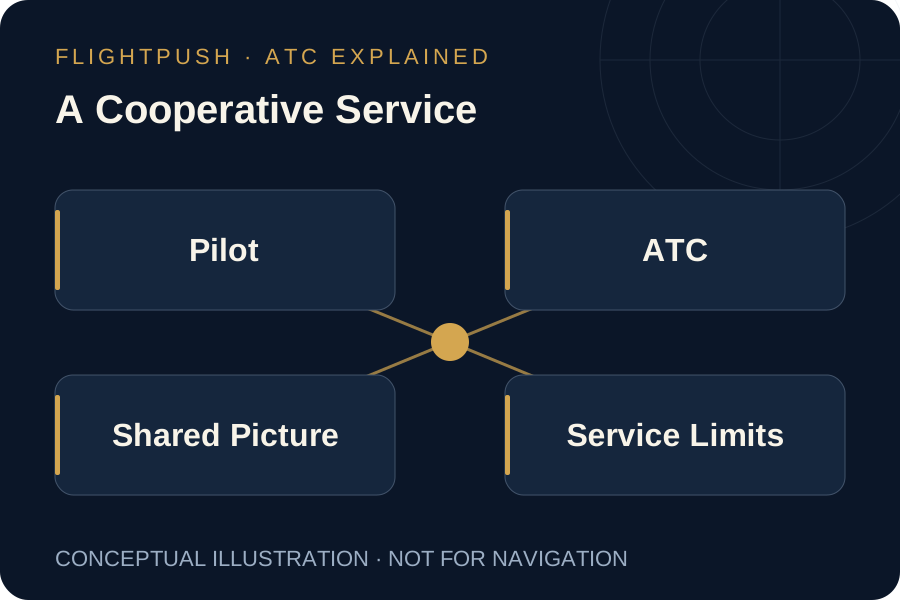
Air Traffic Control
What ATC Provides to VFR Aircraft
Explore flight following, airspace entry, traffic information, weather, and the responsibilities that remain with a VFR pilot.
Published Aviation Guide
Read Article →
Air Traffic Control
How Pilots and ATC Handle Unexpected Problems
Understand how pilots, controllers, airports, and responders build a workable response to equipment problems, diversions, and emergencies.
Published Aviation Guide
Read Article →
Air Traffic Control
How Airspace, Routes, and Sectors Shape a Flight
Separate airspace classes, published routes, clearances, and controller sectors to understand the network behind a flight path.
Published Aviation Guide
Read Article →