JO 7110.65 — Air Traffic Control
JO 7110.65 3-10-4
INTERSECTING RUNWAY/INTERSECTING FLIGHT PATH OPERATIONS
Issue traffic information to each aircraft operating on intersecting runways.
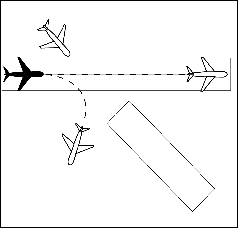
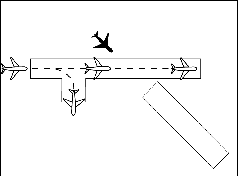
Separate an arriving aircraft using one runway from another aircraft using an intersecting runway or a nonintersecting runway when the flight paths intersect by ensuring that the arriving aircraft does not cross the landing threshold or flight path of the other aircraft until one of the following conditions exists: REFERENCE-
FAA Order JO 7110.65, Para 2-1-21 , Traffic Advisories.
INTERPRETATION-
7110.65, 3-10-4, Intersecting Runway/Intersecting Flight Path Separation and 5-5-4, Minima (2021-06-09)
The preceding aircraft has departed and passed the intersection/flight path or is airborne and turning to avert any conflict. (See FIG 3-10-6 and FIG 3-10-7.) FIG 3-10-6 Intersecting Runway Separation
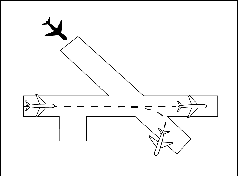
FIG 3-10-7 Intersecting Runway Separation
A preceding arriving aircraft is clear of the landing runway, completed landing roll and will hold short of the intersection/flight path, or has passed the intersection/flight path. (See FIG 3-10-8 and FIG 3-10-9.) FIG 3-10-8 Intersection Runway Separation
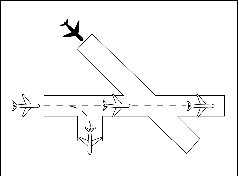
FIG 3-10-9 Intersection Runway Separation
NOTE-
When visual separation is being applied by the tower, appropriate control instructions and traffic advisories must be issued to ensure go around or missed approaches avert any conflict with the flight path of traffic on the other runway.
REFERENCE-
FAA Order JO 7110.65, Para 7-2-1 , Visual Separation, Subpara a2.
USA/USAF/USN NOT APPLICABLE. An arriving aircraft may be authorized to land and hold short of the intersecting runway/intersecting flight path being used by another departing or arriving aircraft in accordance with FAA Order JO 7110.118, Land and Hold Short Operations (LAHSO). The following procedures apply: NOTE-
Application of these procedures does not relieve controllers from the responsibility of providing other appropriate separation contained in this order.
Instruct the arriving aircraft to land and hold short of the intersecting runway/intersecting flight path. In the case of simultaneous landings and no operational benefit is lost, restrict the aircraft of the lesser weight category (if known). (See FIG 3-10-10 and FIG 3-10-11.) NOTE-
The hold short point issued to an arriving aircraft may or may not be the intersecting runway or approach/departure flight path of the other runway. The hold short point may be a taxiway or other predetermined point on the runway that protects the intersecting runway/intersecting flight path.
REFERENCE-
FAA Order JO 7110.65, Para 3-10-5 , Landing Clearance.
FIG 3-10-10 Intersecting Runway Separation
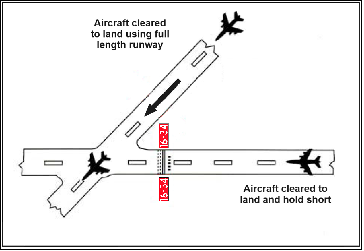
Issue traffic information to both aircraft involved and obtain an acknowledgment from each. EXAMPLE-
“Runway one eight cleared to land, hold short of runway one four left, traffic, (type aircraft) landing runway one four left.”
“Runway one four left cleared to land, traffic, (type aircraft) landing runway one eight will hold short of the intersection.”
“Runway three six cleared to land, hold short of runway three three, traffic, (type aircraft) departing runway three three.”
“Traffic, (type aircraft) landing runway three six will hold short of the intersection, runway three three cleared for takeoff.”
The conditions in subparagraphs b 1 and b 2 above must be met in sufficient time to take other action, if desired by the pilot(s), and no later than the time landing clearance is issued. WAKE TURBULENCE APPLICATION
Separate aircraft landing behind a departing aircraft on a crossing runway if the arrival will fly through the airborne path of the departure by the appropriate radar separation or the following intervals: (See FIG 3-10-11): Category B, C, D, E, F, G, H, or I aircraft behind Category A aircraft – 3 minutes .
Category B, C, D, E, F, G, H, or I aircraft behind Category B or D aircraft – 2 minutes .
Category E, F, G, H, or I aircraft behind Category C aircraft – 2 minutes .
Category I aircraft behind Category E aircraft – 2 minutes .
Issue wake turbulence cautionary advisories, the position, altitude if known, and direction of flight of Category A, B, C, D, or E aircraft to: REFERENCE-
AC 90-23, Aircraft Wake Turbulence, Para 11, Pilot Responsibility.
FIG 3-10-11 Intersecting Runway Separation
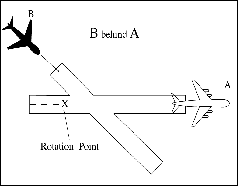
All aircraft landing on a crossing runway behind a departing aircraft that requires wake turbulence separation behind it if the arrival flight path will cross the takeoff path behind the departing aircraft rotation point. (See FIG 3-10-12.) FIG 3-10-12 Intersecting Runway Separation
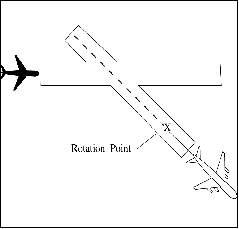
EXAMPLE-
“Runway niner cleared to land. Caution wake turbulence, heavy C-Seventeen departing runway one five.”
All VFR aircraft landing on a crossing runway behind an arriving Category A, B, C, or D aircraft and VFR Category I aircraft landing on a crossing runway behind a Category E aircraft, if the arrival flight paths will cross. (See FIG 3-10-13.) FIG 3-10-13 Intersecting Runway Separation
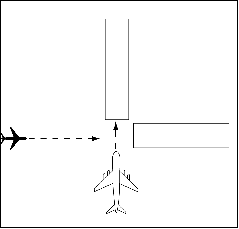
EXAMPLE-
“Runway niner cleared to land. Caution wake turbulence, Boeing Seven Fifty Seven landing runway three six.”
REFERENCE-
FAA Order JO 7110.65, Para 7-4-4 , Approaches to Multiple Runways.
Retrieved from ecfr.gov on July 20, 2026.