JO 7110.65 — Air Traffic Control
JO 7110.65 3-10-3
SAME RUNWAY SEPARATION
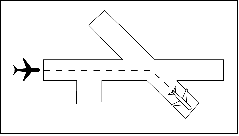
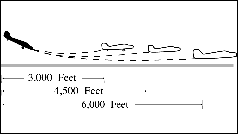
Separate an arriving aircraft from another aircraft using the same runway by ensuring that the arriving aircraft does not cross the landing threshold until one of the following conditions exists or unless authorized in paragraph 3-10-10 , Altitude Restricted Low Approach. The other aircraft has landed and is clear of the runway. (See FIG 3-10-1.) Between sunrise and sunset, if you can determine distances by reference to suitable landmarks and the other aircraft has landed, it need not be clear of the runway if the following minimum distance from the landing threshold exists: REFERENCE-
P/CG Term - Clear of the Runway.
FIG 3-10-1 Same Runway Separation
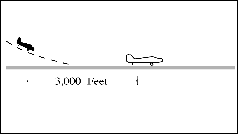
When a Category I aircraft is landing behind a Category I or II- 3,000 feet .
(See FIG 3-10-2.) FIG 3-10-2 Same Runway Separation
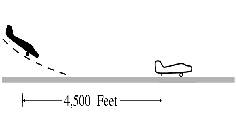
When a Category II aircraft is landing behind a Category I or II- 4,500 feet.
(See FIG 3-10-3.) FIG 3-10-3 Same Runway Separation
The other aircraft has departed and crossed the runway end. (See FIG 3-10-4). If you can determine distances by reference to suitable landmarks and the other aircraft is airborne, it need not have crossed the runway end if the following minimum distance from the landing threshold exists: Category I aircraft landing behind Category I or II- 3,000 feet .
Category II aircraft landing behind Category I or II- 4,500 feet.
When either is a category III aircraft- 6,000 feet . (See FIG 3-10-5.) FIG 3-10-4 Same Runway Separation
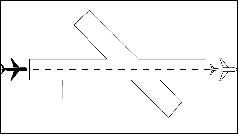
FIG 3-10-5 Same Runway Separation
When the succeeding aircraft is a helicopter or powered‐lift aircraft, visual separation may be applied in lieu of using distance minima. WAKE TURBULENCE APPLICATION
Issue wake turbulence advisories, and the position, altitude if known, and the direction of flight of departing or arriving aircraft on the same runway or parallel runways separated by less than 2,500 feet to: Category B, C, D, E, F, G, H, and I aircraft behind Category A, B, or D aircraft.
Category E, F, G, H, or I aircraft behind Category C aircraft.
Category I aircraft behind Category E aircraft. REFERENCE-
AC 90-23, Aircraft Wake Turbulence, Para 11, Pilot Responsibility.
FAA Order JO 7110.65, Para 3-10-10 , Altitude Restricted Low Approach.
EXAMPLE-
“ Runway two seven left cleared to land, caution wake turbulence, heavy Boeing 747 departing runway two seven right.”
“Number two follow Boeing 757 on 2‐mile final. Caution wake turbulence.”
“Traffic, heavy Boeing 787 on 2‐mile final to the parallel runway, runway two six right, cleared to land. Caution wake turbulence.”
Retrieved from ecfr.gov on July 20, 2026.