JO 7110.65 — Air Traffic Control
JO 7110.65 3-12-3
ARRIVAL SEPARATION
Separate an arriving aircraft from another aircraft using the same sea lane by ensuring that the arriving aircraft does not cross the landing threshold until one of the following conditions exists:
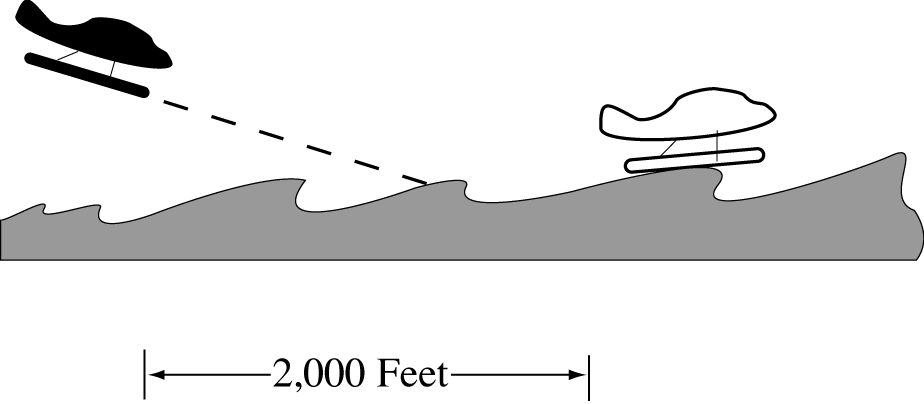
The other aircraft has landed and taxied out of the sea lane. Between sunrise and sunset, if you can determine distances by reference to suitable landmarks and the other aircraft has landed, it need not be clear of the sea lane if the following minimum distance from the landing threshold exists: When a Category I aircraft is landing behind a Category I or II- 2,000 feet. (See FIG 3-12-3.) FIG 3-12-3 Sea Lane Arrival Operations
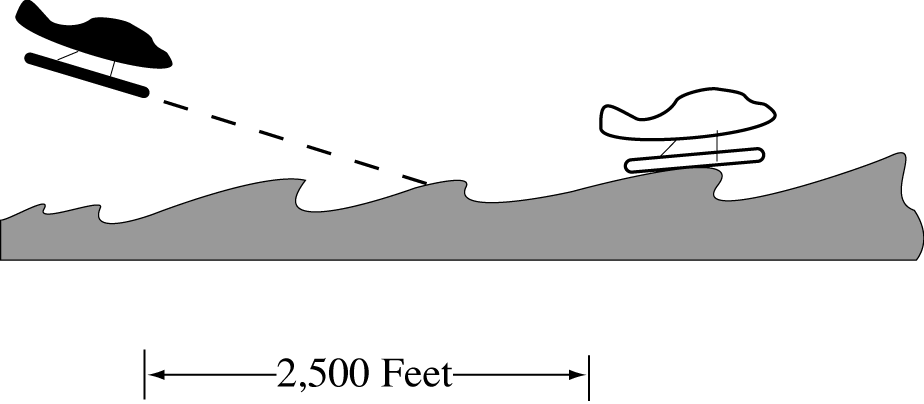
When a Category II aircraft is landing behind a Category I or II- 2,500 feet. (See FIG 3-12-4.) FIG 3-12-4 Sea Lane Arrival Operations
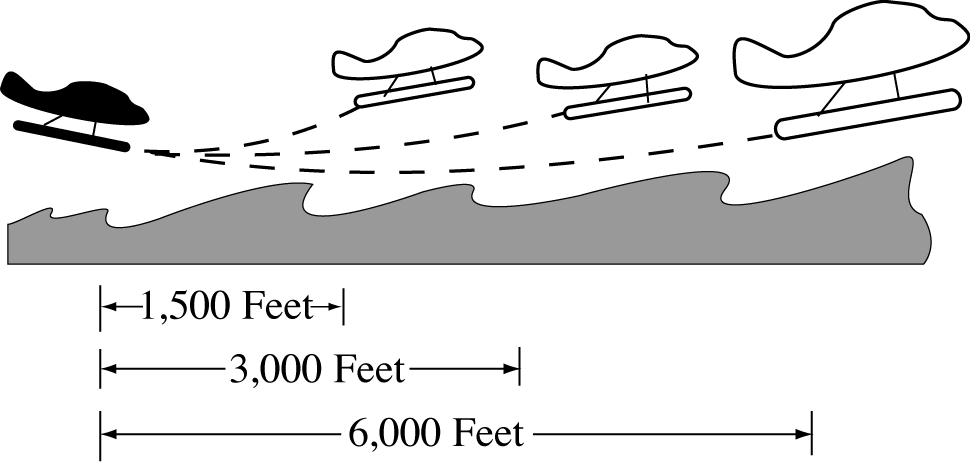
The other aircraft has departed and crossed the end of the sea lane or turned to avert any conflict. (See FIG 3-12-5.) If you can determine distances by reference to suitable landmarks and the other aircraft is airborne, it need not have crossed the end of the sea lane if the following minimum distance from the landing threshold exists: When only Category I aircraft are involved- 1,500 feet.
When either is a Category II aircraft- 3,000 feet.
When either is a Category III aircraft- 6,000 feet . (See FIG 3-12-6.) FIG 3-12-5 Sea Lane Arrival Operations
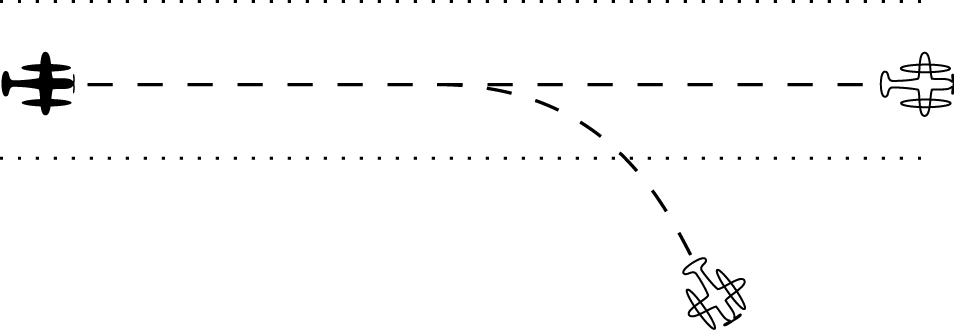
FIG 3-12-6 Sea Lane Arrival Operations
Previous | Top | Next 7110.65 |
ATPUBS |
FAA |
Send your comments regarding this website.
Retrieved from ecfr.gov on July 20, 2026.